


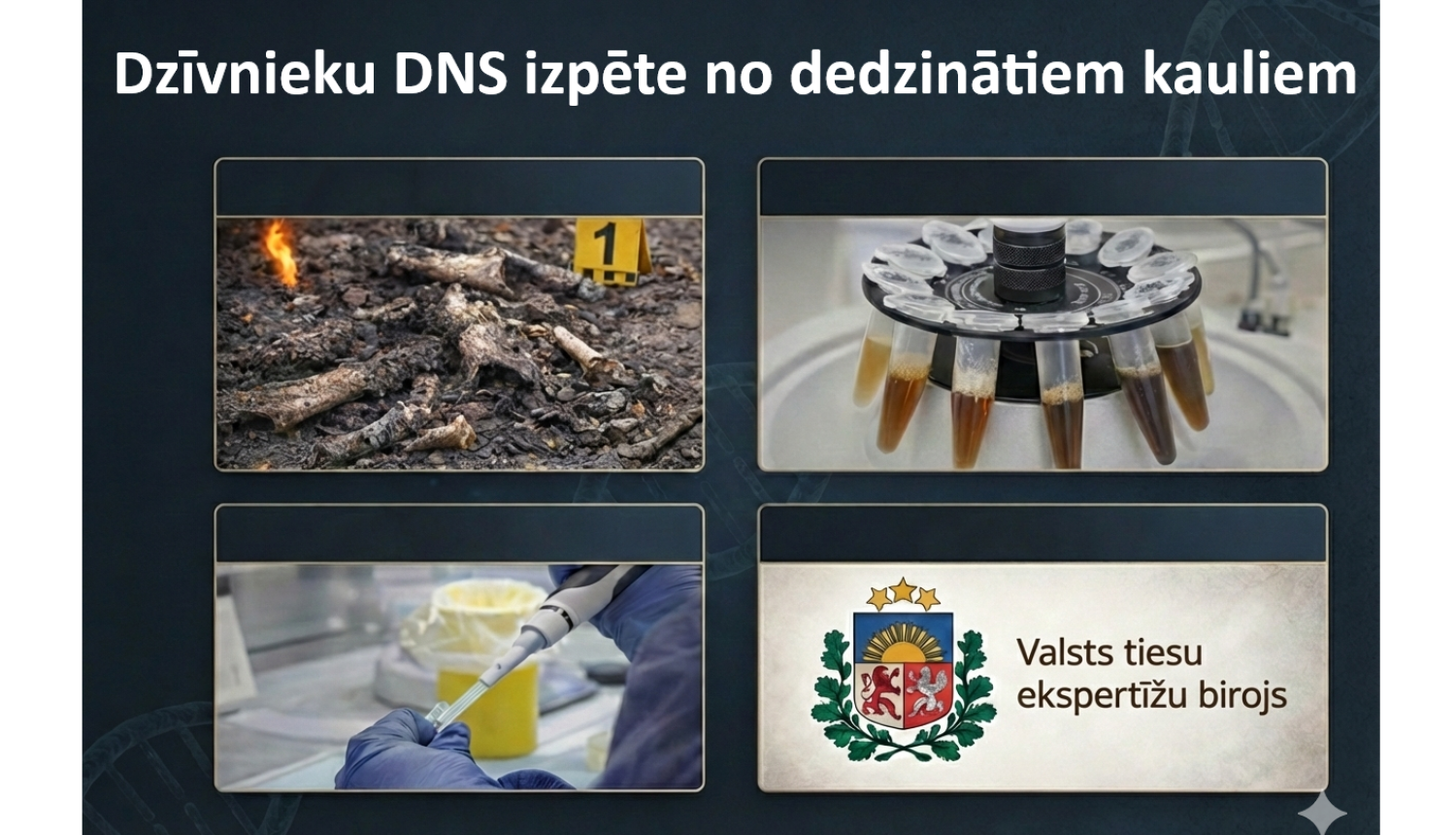
The experiment was conducted at the Biological and Chemical Examinations Department of the State Forensic Science Bureau to assess how bone burning affects the ability to determine an animal species using nhDNA (i.e., plant and animal DNA) analysis methods. The results help to better understand when thermally damaged bones are still suitable for DNA analysis and in which cases DNA is expected to be irreversibly degraded.
🔥 In investigations of fires, burnings, and attempts to conceal traces, charred or burned bone remains are often found. DNA analysis under such conditions is challenging because high temperatures and prolonged thermal exposure degrade DNA.
🔬 In the test, bone samples were heated at high temperatures for different time intervals (0–50 minutes). DNA extraction and species identification were then performed by analyzing a short mitochondrial DNA fragment (~150 bp, cytb).
📌 Main conclusion: it is possible to obtain DNA suitable for analysis even from burned bones.
📊 The obtained results are practically applicable in investigations involving:
• 🐾 situations involving the burning of animal carcasses, bones, or parts thereof (e.g., illegal disposal, poaching, animal cruelty), where species identification is important;
• 👣 cases where it must be determined whether the found material is of animal or human origin (to guide the direction of the investigation);
• 🦴 unburned animal bone and hard tissue samples, including cases where visual species identification is difficult (dry skeletal bones, fragments, teeth/tusks, horns) and nhDNA analysis is required;
• 🌍 inspections and criminal proceedings related to possible violations of CITES regulations, where it is necessary to determine whether the found bone/tusk/horn material may belong to a protected species (e.g., illegal acquisition, transport, storage, or trade, including attempts to conceal origin by processing or fragmenting the material).
📩 If you have questions regarding the appointment of an examination, including sample selection and submission, please contact the State Forensic Science Bureau.